Myopia, or nearsightedness, is one of the most common vision problems in the world, and it’s on the rise. In myopic eyes, close objects are clear, but distance vision becomes blurry. This happens when the eye is too long or the cornea has too much curvature, causing light to focus in front of the retina rather than directly on it.
Today, more than 47 million Americans over age 20 are affected by myopia. According to the National Eye Institute, the prevalence of myopia in the U.S. has increased by more than 66% since the 1970s. For children, the trend is accelerating even faster.
Corrective lenses help you see clearly, but they don’t slow the progression of myopia. That matters, because high myopia is associated with greater lifelong risk of:
Myopia control is most effective when started early, typically between ages 6 and 14, before the eyes stabilize. That’s why we focus on myopia control, not just correction. Our goal is to help protect long-term eye health.
When the eye grows too long (axial elongation), it causes distant objects to appear blurry. This is a condition known as myopia, also referred to as nearsightedness. Research indicates that this eye growth may be triggered by a signal from the brain, often associated with prolonged near work, such as reading or screen time. If we can create what’s called “peripheral myopic defocus,” we can reduce that signal and help slow the progression of myopia.
To combat myopia, we offer a few effective, non-surgical therapies.
Orthokeratology lenses are custom, gas-permeable contacts worn overnight to gently reshape the cornea.
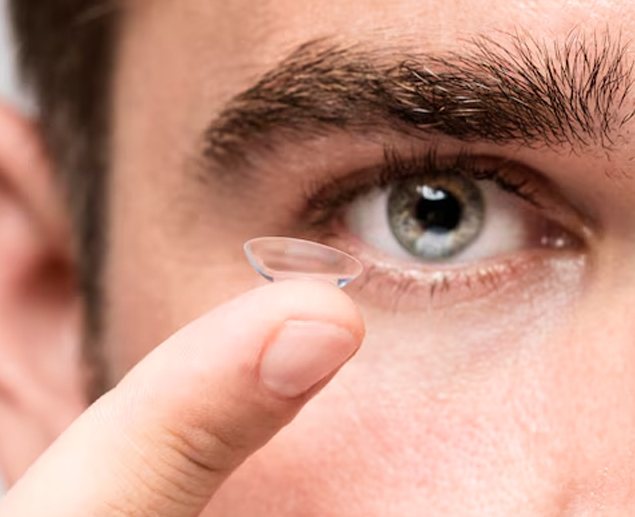
These soft contact lenses feature alternating zones that correct vision while simultaneously creating peripheral defocus to slow eye growth.
We offer two options:
MiSight® 1 day
NaturalVue® Multifocal
A one-day multifocal contact lens used off-label for myopia control
Atropine is a medicated eye drop that works by reducing the chemical signals that trigger eye elongation.
Myopia management is most effective for children and teens between the ages of 6 and 14, but treatment may be appropriate for other ages depending on eye health and lifestyle. At Primary Eye Care Associates, we closely monitor each patient’s prescription changes, corneal shape, and overall progression using advanced diagnostics. Our team will help determine which option—Ortho-K, GVSS, or another approach—best suits your child’s needs and goals. We’ll track changes in prescription and monitor axial length and corneal topography over time to assess how well treatment works and adjust as needed.
We offer advanced myopia care to families in Burlington, Northern Kentucky, and the greater Cincinnati area. If your child’s prescription keeps changing, or you’re looking for a safe, glasses-free option, let’s connect.
Help your child see better now—and safeguard their vision for the future.